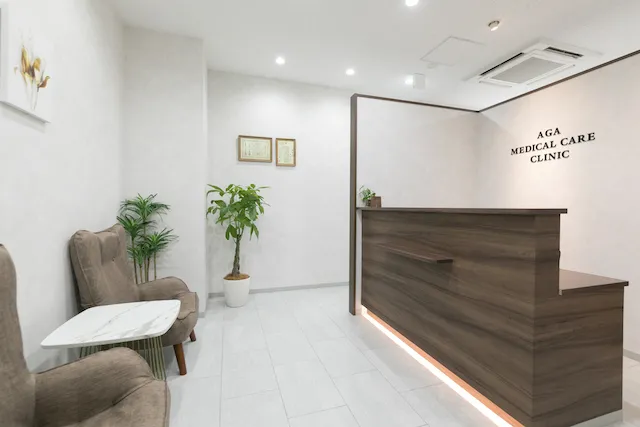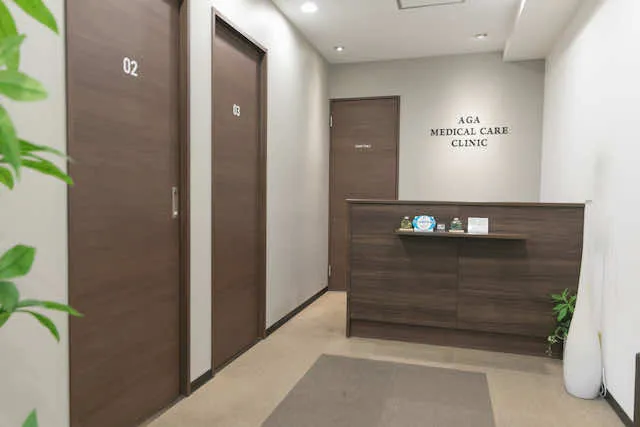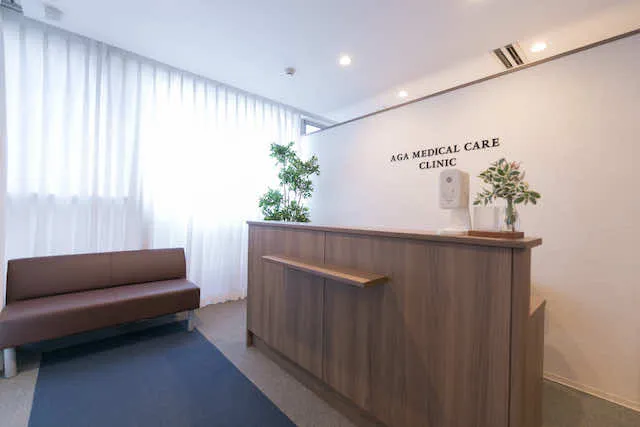
Access to a Japanese hair loss clinic varies by building and clinic routine, rather than following a single national standard. Whether you can navigate the clinic using a cane, rollator, or wheelchair depends on factors such as the entrance route, elevator availability, exam-room layout, and transfer assistance.
Describe your needs before booking and ask for a written answer about the route you would use. Japan’s 2024 accommodation law supports that conversation.
Ask the clinic directly about mobility access
Our public pages do not provide specific access details for our clinics. To get started, please submit a written request. Ask the office to confirm the features that are important for your mobility aid, instead of relying on a general statement.
Keep in mind that elevator sizes, doorway widths, and turning space can vary by building.
Expect an in-person first visit
Our clinic sees patients by appointment only, and a doctor examines your scalp in person before suggesting a treatment plan.
At your first visit, staff will take you from reception to a private room for scalp photos and a microscope check, then you’ll talk with a doctor and a counselor. If you use a wheelchair, ask how each step would work for you.
What Japan’s accommodation law requires
Since April 1, 2024, businesses in Japan have been legally required to provide reasonable accommodation when a person with a disability asks for it. The duty applies unless the change would place a disproportionate burden on the business.
The law stresses constructive dialogue, in which the clinic and patient discuss what is possible. You can state your needs plainly and ask how the clinic would meet them before you commit to a date.
Information to share in your first message
The contact form may not ask about access, but staff need a few practical details to check the route and give you a useful answer.
In your initial message, please mention the mobility aid you typically use—like a cane, rollator, walker, or wheelchair. Indicate whether you can transfer to an examination table or chair on your own.
Also, let us know whether a companion will accompany you and what assistance you may need, such as help opening doors or navigating from reception to the exam room.
Questions about getting into and around the clinic
After sharing your needs, inquire about the path from the building entrance to the examination room.
- Are the building entrance, front desk, and corridors accessible with my mobility aid?
- Can the elevator fit me, my chair, and any companion or equipment?
- Is there enough space to enter the consultation room and turn around?
- Can staff help me transfer onto the examination table or chair?
- Is there an accessible restroom on the clinic floor or close by?
Why mobility access can still vary
Having the right equipment does not guarantee it is used for every patient. Inquire how the staff will manage the room and transfer for you.
Appointment and screening research
A systematic review of primary care visits in 2026 found that the percentage of missed appointments ranged from about 5% to 31% across 27 studies, with travel-related barriers identified as a contributing factor.1
A qualitative review of five studies revealed that both patients and providers cited transportation issues and difficult-to-navigate facilities as reasons for repeated missed appointments.2
In a systematic review conducted in 2022 of nine studies on cervical cancer screening, it was found that wheelchair-accessible equipment and assistance from a companion facilitated attendance for individuals with physical disabilities.3
U.S. clinic survey results
In a U.S. phone survey of 256 outpatient practices, 22% reported that they could not accept a fictional patient in a wheelchair, and 18% indicated they could not transfer the person to an examination table.4
In a 2021 U.S. survey of 714 physicians, 40.3% reported that they always or usually use an accessible examination table or chair for patients with significant mobility limitations.5
| Barrier reported | Share in the survey | Question to ask |
|---|---|---|
| Could not accept the wheelchair user | 22% | Can you see a patient who uses a wheelchair? |
| Could not transfer the person to an exam table | 18% | What transfer help is available? |
| Building was inaccessible | 4% | Is the route from entrance to reception accessible? |
What to confirm before booking
These numbers do not describe Japanese hair clinics, but they show why specific written answers help. A clinic with an accessible entrance may still have a narrow consultation room or no plan for transfer. A reply that names the route, elevator, room, and staff help lets you compare clinics.
Keep each reply with your booking details, and check it against your route and transfer needs before you choose a date. To ask about access at our clinics in Tokyo and Yokohama, send the points above through the email contact form.
Frequently asked questions
- Can I use a wheelchair at a Japanese hair clinic?
-
Access depends on the individual building and clinic layout. Ask the clinic to confirm the route from the entrance to reception, the elevator size, the consultation room, and the restroom before you book.
- Do clinics in Japan have to provide mobility accommodations?
-
Yes, within limits. Since April 2024, businesses have been legally required to provide reasonable accommodations when requested, unless a change would place a disproportionate burden on the clinic. State your needs clearly and keep the written reply.
- What should I write in my first message?
-
Begin with your preferred clinic, date, and visit type, then add your mobility aid, whether you can transfer, whether a companion will come, and what help you need. The reply should confirm the specific route or tell you what needs further discussion.
- Will staff help me move to the examination chair?
-
It depends on the clinic, and our clinic does not publish room or staffing details. Describe the help you need, then use the written reply to decide whether the appointment will work.
References
1. Jad, A. Z., Alotaibi, S. M., Asiri, A. M., Alobaid, S. K., Algahamdi, R. A., Alaqeel, L. A., Aljabri, K. F., Alamer, A. K., Alsultan, J. I., & Almaqhawi, A. (2026). Global Predictors of Appointment Non-Adherence in Primary Care Settings: A Systematic Review. Healthcare (Basel, Switzerland), 14(5). https://doi.org/10.3390/healthcare14050623
2. Aldadi, A., Robb, K. A., & Williamson, A. (2024). Factors influencing multiple non-utilised healthcare appointments from patients’ and healthcare providers’ perspectives: a qualitative systematic review of the global literature. BJGP open, 8(4). https://doi.org/10.3399/BJGPO.2024.0075
3. Chan, D. N. S., Law, B. M. H., So, W. K. W., & Fan, N. (2022). Factors associated with cervical cancer screening utilisation by people with physical disabilities: A systematic review. Health policy (Amsterdam, Netherlands), 126(10), 1039-1050. https://doi.org/10.1016/j.healthpol.2022.08.003
4. Lagu, T., Hannon, N. S., Rothberg, M. B., Wells, A. S., Green, K. L., Windom, M. O., Dempsey, K. R., Pekow, P. S., Avrunin, J. S., Chen, A., & Lindenauer, P. K. (2013). Access to subspecialty care for patients with mobility impairment: a survey. Annals of internal medicine, 158(6), 441-6. https://doi.org/10.7326/0003-4819-158-6-201303190-00003
5. Iezzoni, L. I., Rao, S. R., Ressalam, J., Bolcic-Jankovic, D., Donelan, K., Agaronnik, N., Lagu, T., & Campbell, E. G. (2021). Use of Accessible Weight Scales and Examination Tables/Chairs for Patients with Significant Mobility Limitations by Physicians Nationwide. Joint Commission journal on quality and patient safety, 47(10), 615-626. https://doi.org/10.1016/j.jcjq.2021.06.005