A Japanese hair clinic can keep your visit confidential; however, specific privacy measures vary from one clinic to another.
If you are considering traveling to Japan for hair loss treatment, it’s important to know that the law provides a strong foundation for protecting your medical information. Before making an appointment, ask about the steps the clinic takes to safeguard your privacy.
Japanese law protects your medical information
Two Japanese laws protect your medical information. Criminal law prohibits a doctor from revealing patient secrets learned through medical work without a legitimate reason.
The Act on the Protection of Personal Information adds a second layer: medical history is special care-required personal information. As a result, a clinic generally must obtain your consent before collecting it and before sharing it with a third party.
Special care-required personal information includes details such as medical history, which could lead to unfair treatment if handled carelessly. Consent is the default for sharing.
A clinic may provide your information without it only in limited cases, such as when a law requires the disclosure or when there is an immediate need to protect someone’s life.
Wanting discretion is natural. In a European survey of men aged 18 to 45, 22% said hair loss could harm their social life.1 A survey of 604 men aged 25 to 49 in six countries found that 58% felt embarrassed or somewhat embarrassed about discussing hair loss with a doctor.2
Private visits start at the clinic entrance
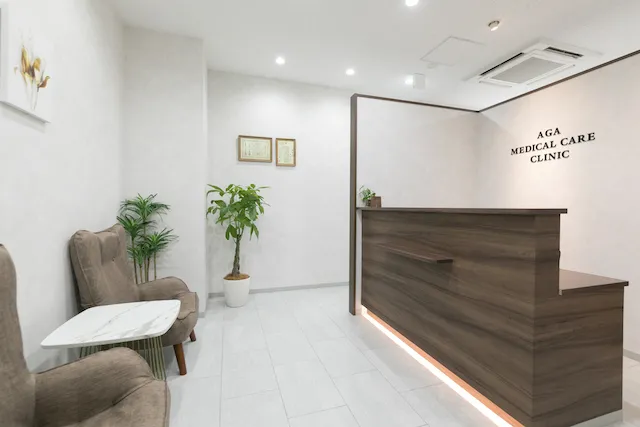
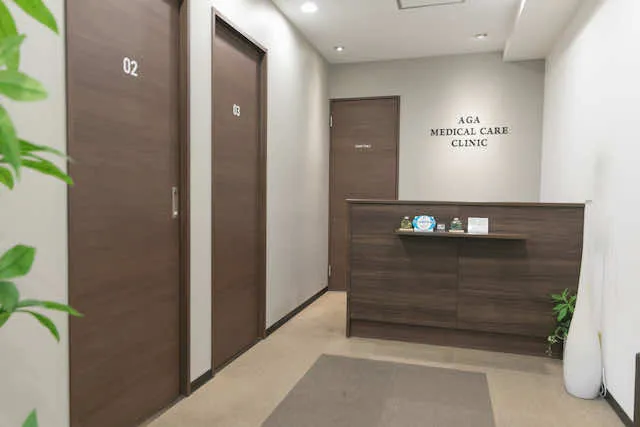
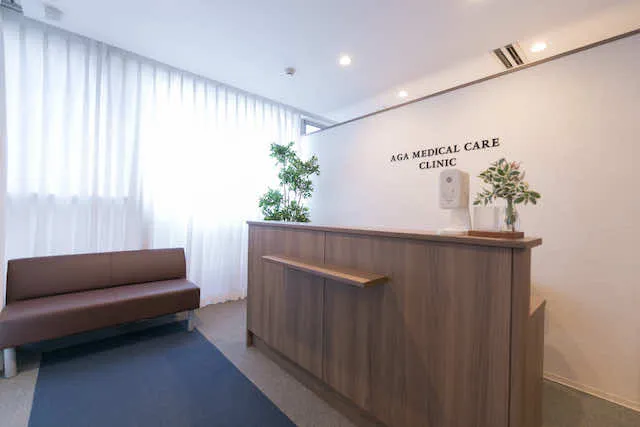
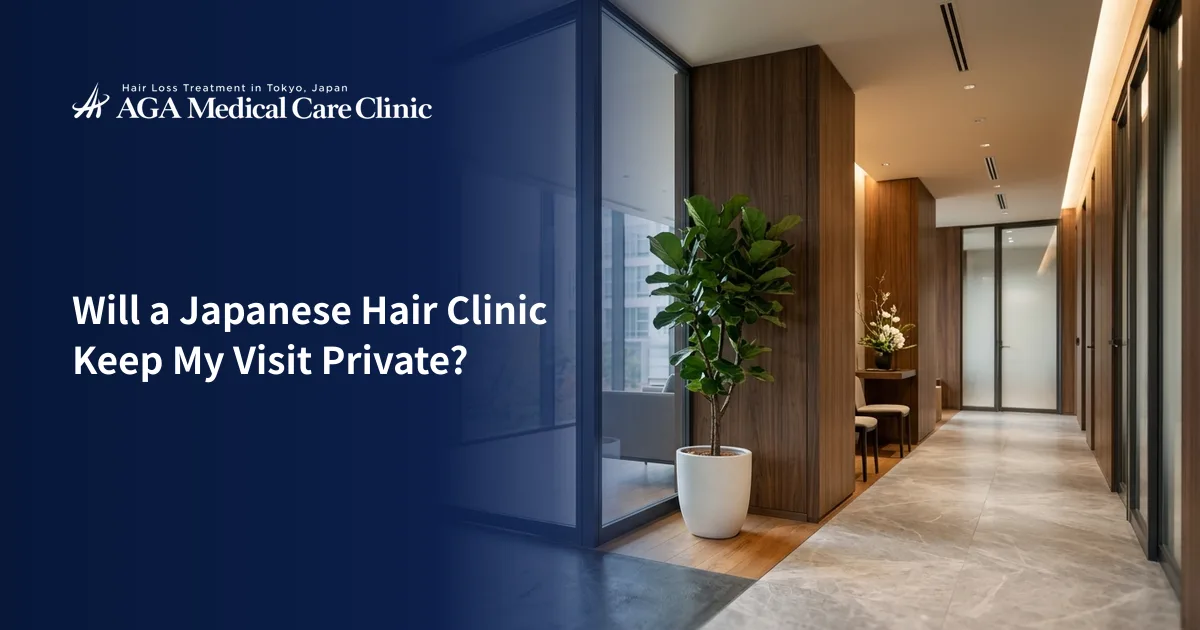
At our clinic, privacy starts before you sit down. You are shown to a private room as soon as you arrive, and the appointment-only flow keeps you from meeting other patients between reception and checkout.
Not every clinic in Japan arranges this the same way. Some use a shared waiting room and an open reception counter, which isn’t illegal, but it changes how private the visit feels. Before you book, ask where you will wait and whether other patients will be in the same area.
Keeping clinical photos private
Progress photos are a standard part of hair loss care, helping your doctor track changes in the same area over time. At our clinic, we only photograph your hair and scalp.
What the photo rules should cover
Privacy involves more than just the type of camera used. Guidelines for clinical photography emphasize that taking patient photos on unsecured smartphones, sending them through consumer messaging apps, or storing them in regular cloud services can compromise patient data.
Additionally, a review of legal cases in the U.S. indicates that consent for in-clinic use should be distinct from consent for external publication.
In a survey of 205 plastic surgery outpatients, 75% said they would accept photos taken with hospital equipment, while only 12% said they would accept a photo taken with a personal phone.3 Patients clearly preferred clinic equipment over personal phones.
Ask whether the clinic uses its own camera equipment or a staff member’s phone, where the images are stored, who can open them, and how photos are taken, transferred, stored, and accessed.
When your information may be shared outside the clinic
Your information should not leave the clinic without a clear reason. Under Japanese law, sharing personal data with a third party generally requires your consent.
Two common destinations are an outside laboratory and another medical provider. A hair analysis or genetic test may be processed by an external company, or your records may need to go to a doctor you see after returning home.
Ask in advance which of these transfers would apply to your case and whether your name will be attached.
Disclosure to a family member or employer is not automatic. The same consent rule applies to them. You can tell a clinic not to contact those people and ask how it records that instruction.
What to check about privacy before you book
Taking a moment to check a clinic’s privacy practices before booking can prevent unpleasant surprises. Look closely at the patient flow inside the clinic, how photos are stored and used, how they’ll reach out to you, and whether they share any of your data outside the clinic.
A short checklist for your booking message
| Area | What to confirm | Why it matters |
|---|---|---|
| Clinic flow | Whether you wait in a shared area or move directly into a private room | This shapes how many other patients you may encounter |
| Photos | Which device is used, where images are stored, and who can open them | Privacy risks remain after a photo is taken |
| Contact | Which email address or channel the clinic will use for updates | Others may read messages from the clinic if the channel is not private |
| Outside sharing | Whether a sample, test result, or record will leave the clinic | Consent should be clear before any transfer |
The answers should be clear. If the clinic says photos are kept securely, ask where they are stored and who can open them.
How our Tokyo and Yokohama clinics approach privacy
Each of our clinics sees patients by appointment only and provides private rooms.
The clinic was established to ensure that individuals who have bravely decided to seek help can concentrate on their consultation rather than the waiting room experience.
During your visit, we will take photos of your hair and conduct a microscopic examination of your scalp, followed by a doctor’s assessment. A certified hair counselor is also available to address any sensitive concerns you may have throughout the visit.
You may start treatment that day, or you may have the examination and consultation only and decide later. The choice remains yours.
Before sending the form, include three specific requests:
- A description of how clinical photos are captured and stored
- The contact method the clinic will use for results and reminders
- Confirmation of whether any sample or record will leave the clinic
If you would like to confirm how your records, photos, and contact details will be handled, send your questions through the contact form. Our clinics are located in Tokyo and Yokohama, Japan.
Frequently asked questions
- Will other patients see me at the clinic?
-
No. You are shown to a private room as soon as you arrive, and the appointment-only flow keeps you from meeting other patients between reception and checkout.
- Is my medical history protected under Japanese law?
-
Yes. Medical history is special care-required personal information. As a result, a clinic generally must obtain consent before collecting it and before sharing it with a third party. Japanese criminal law also prohibits doctors from revealing patient secrets without a valid reason.
- What should I ask before I book?
-
Ask how photos are captured and stored, which contact method the clinic will use, and whether any sample or record will leave the clinic. A clear reply lets you compare clinics before you book.
- Can I keep my treatment private from family or employers?
-
You can tell the clinic whom it may contact and through which channel. Send your contact preferences through the contact form, and we will reply by email to explain how we handle these requests.
References
1. Alfonso, M., Richter-Appelt, H., Tosti, A., Viera, M. S., & García, M. (2005). The psychosocial impact of hair loss among men: a multinational European study. Current Medical Research and Opinion, 21(11), 1829-36. https://doi.org/10.1185/030079905X61820
2. Cash, T. F. (2009). Attitudes, behaviors, and expectations of men seeking medical treatment for male pattern hair loss: results of a multinational survey. Current Medical Research and Opinion, 25(7), 1811-20. https://doi.org/10.1185/03007990903005201
3. Lau, C. K., Schumacher, H. H., & Irwin, M. S. (2010). Patients’ perception of medical photography. Journal of Plastic, Reconstructive & Aesthetic Surgery : JPRAS, 63(6), e507-11. https://doi.org/10.1016/j.bjps.2009.11.005
Creadore, A., Manjaly, P., Li, S. J., Tkachenko, E., Zhou, G., Joyce, C., Huang, K. P., & Mostaghimi, A. (2021). Evaluation of Stigma Toward Individuals With Alopecia. JAMA Dermatology, 157(4), 392-398. https://doi.org/10.1001/jamadermatol.2020.5732
Patmon, D., Sandhu, H., Girotto, J., & Ford, R. (2023). Legal Ramifications of Publishing Patient Photographs: A Review of Legal Cases. Plastic and Reconstructive Surgery Global Open, 11(8), e5162. https://doi.org/10.1097/GOX.0000000000005162