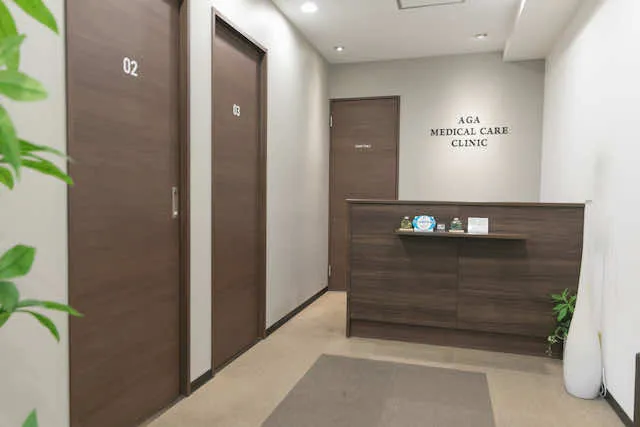

To ensure a smooth continuation of your hair loss treatment after leaving Japan, you need a clear follow-up plan. Before your final visit, determine when your next check-up will occur, who will conduct it, and what materials you need to bring home.
The right plan depends on how long you have been on treatment. If you started recently, plan a check once enough time has passed to judge the response.
If your treatment is stable, an online review or a local doctor may be enough. Settling this before you leave helps you avoid a gap in care once you are home.
Why follow-ups need a plan before you leave
Follow-ups divide a long treatment into smaller, manageable checkpoints. Hair loss medications can take months to show their full effect, and a clear plan helps identify the next steps.
What regular follow-up care usually includes
A published standard-procedures paper in trichology recommends combining whole-scalp photos with magnified scalp images at 3, 6, and 12 months and reports that patients continued follow-up at a rate above 90% under that routine.1
This is just one model, not a guarantee that every clinic uses those exact dates.
Regular checks also give you a chance to talk about side effects. In a study of 156 adults with androgenetic alopecia, side effects and whether the treatment seemed to be helping were linked to whether people kept taking medicine.2
A timely follow-up can address both concerns before a minor issue leads a patient to discontinue treatment.
Plan follow-ups around your treatment stage
Your stage of treatment matters more than a rigid schedule. Once your condition stabilizes, follow-up care can be scaled back.
How early and stable treatment differ
The Japanese prescribing information for finasteride indicates that some men may notice effects after about three months of use. However, a full six months of daily use is typically required before determining whether a response has occurred. Six months is the more reliable timeframe.
In a small study of 49 people using topical minoxidil, temporary hair shedding increased during the first 12 weeks.3
This is not a signal to stop your current treatment on your own. Instead, discuss any changes with your doctor at your next check-up.
If you have been stable for several months, the upcoming follow-up can concentrate on maintenance rather than making new treatment decisions. Your doctor can also advise you on whether an online review will be effective once you are back home.
Choose where your follow-ups happen
You have three options: return to Japan for an in-person visit, consult your Japanese clinic online, or see a local doctor. The best choice depends on your stage of treatment and your doctor’s recommendations.
In-person, online, or local care
An in-person visit lets the same doctor repeat the photos and scalp exam from your earlier visits. This route makes sense when the treatment is still new, or the response is unclear.
If your treatment is stable, an online review may be enough. Our clinic can provide an online follow-up from overseas when your doctor judges that the treatment effect is stable and you request it.
An online visit should still be a live video call, not only messages or recordings. Because we cannot ship medicine, the online visit is a consultation only.
A local doctor can also help with basic monitoring. Bring clear written records that tell the next clinician what was prescribed and why. Ask your Japanese doctor which route fits your situation.
Bring the right records and medication details home
Before you leave, ask the clinic for any documents you can show other doctors. Written details help prevent confusion about medicine names, dosages, and what to monitor next.
Ask for a simple summary that lists each medicine, its dose, the start date, and the next planned check. At our clinic, we can issue treatment records and related documents in English if you ask before leaving.
Also write down how to contact the clinic after you return. Keep the summary with your passport. This makes it easy for a local doctor or pharmacist to see the details later.
If a medicine can affect certain lab values, the next clinician needs to know that before running tests. The written record makes that easier to explain.
Ask these questions at your final visit
Use your final visit to address any remaining questions. A brief written checklist keeps the details from getting lost on the way home.
A four-item departure checklist
| What to settle | What to write down | Why it helps |
|---|---|---|
| Next check time | The month or date for the next progress review | Keeps a clear endpoint before you leave |
| Who will check | Your Japanese doctor, an online visit, or a local doctor | Prevents a long gap in care |
| Progress photos | When to take the next progress photos | Makes later comparisons easier |
| Medicine supply | The date your current medicine runs out | Shows when to plan ahead before the supply ends |
Questions to ask your doctor
Please make sure to ask these questions during your visit.
- When should I schedule my next follow-up?
- Can I continue with an online follow-up from my home country?
- Which time slots and system do you use for online follow-ups?
- Can you issue my treatment records in English before I leave?
Write the answers in one place and keep them with your travel documents. Our clinics in Tokyo and Yokohama can help you confirm these details before you leave.
Frequently asked questions
- Can I continue follow-up care with my Japanese clinic after I leave Japan?
-
Yes. If your treatment effect is stable and the doctor agrees, our clinic can provide an online follow-up from overseas.
Ask which time slots and system to use before you leave. Keep in mind that it is a consultation only, because we cannot ship medicine.
- How much medicine can I ask for at my final visit?
-
Your doctor can discuss how much medication fits your travel plan and treatment stage. The clinic can provide an English medicine certificate signed by the doctor if that is useful for your trip.
Each country’s customs authority makes the final entry decision. Check the rules for your destination before you pack the medicine.
- What should I bring to my final appointment before flying home?
-
Bring your passport, your current medicines, a list of questions, and your departure date.
Ask for English-language treatment records and a medicine summary before you leave. Store them with your passport for the trip.
- Does treatment stop working if I switch to online follow-up?
-
No. The online visit checks your progress; it does not change how the medicine works.
Keep your usual daily schedule and raise any side effects or concerns during the online follow-up.
References
1. Baksanskaite, J., Luu, N. C., Uribe, N. C., & Trüeb, R. M. (2025). Standard Operating Procedures in Trichological Practice. International Journal of Trichology, 17(2), 147-150. https://doi.org/10.4103/ijt.ijt_69_24
2. Wu, X., Tang, Y., Shen, N., & Wang, Z. (2025). Analysis on the treatment compliance of patients with androgenetic alopecia and its influencing factors: based on the comparison between microneedle therapy and drug therapy. Archives of Dermatological Research, 317(1), 670. https://doi.org/10.1007/s00403-025-04211-0
3. Bi, L., Kan, H., Wang, J., Ding, Y., Huang, Y., Wang, C., Du, Y., Lu, C., Zhao, M., Sun, W., Su, T., & Fan, W. (2025). Whether the transient hair shedding phase exist after minoxidil treatment and does it predict treatment efficacy? A retrospective study in androgenetic alopecia patients. The Journal of Dermatological Treatment, 36(1), 2480739. https://doi.org/10.1080/09546634.2025.2480739
Hadeler, E., Gitlow, H., & Nouri, K. (2021). Definitions, survey methods, and findings of patient satisfaction studies in teledermatology: a systematic review. Archives of Dermatological Research, 313(4), 205-215. https://doi.org/10.1007/s00403-020-02110-0
Kearney, C. A., Brinks, A. L., Lawrence, C. N., Shapiro, J., Lacouture, M. E., & Lo Sicco, K. I. (2025). Patient Perspectives regarding Artificial Intelligence-Driven Trichoscopy for Alopecia Evaluation. Skin Appendage Disorders. https://doi.org/10.1159/000550043
Alessandrini, A., Starace, M., D’Ovidio, R., Villa, L., Rossi, A., Stan, T. R., Calzavara-Pinton, P., & Piraccini, B. M. (2020). Androgenetic alopecia in women and men: Italian guidelines adapted from European Dermatology Forum/European Academy of Dermatology and Venereology guidelines. Giornale Italiano di Dermatologia e Venereologia, 155(5), 622-631. https://doi.org/10.23736/S0392-0488.19.06399-5
Mella, J. M., Perret, M. C., Manzotti, M., Catalano, H. N., & Guyatt, G. (2010). Efficacy and safety of finasteride therapy for androgenetic alopecia: a systematic review. Archives of Dermatology, 146(10), 1141-50. https://doi.org/10.1001/archdermatol.2010.256
Kaufman, K. D., Olsen, E. A., Whiting, D., Savin, R., DeVillez, R., Bergfeld, W., Price, V. H., Van Neste, D., Roberts, J. L., Hordinsky, M., Shapiro, J., Binkowitz, B., & Gormley, G. J. (1998). Finasteride in the treatment of men with androgenetic alopecia. Finasteride Male Pattern Hair Loss Study Group. Journal of the American Academy of Dermatology, 39(4 Pt 1), 578-89. https://doi.org/10.1016/s0190-9622(98)70007-6