Finasteride and dutasteride are included in the registered drug lists of both Japan and Thailand. When comparing hair loss treatments in these two countries, there are some differences.
These include how the medications are dispensed, which visa is appropriate for your visit, the costs you will incur, and how you can provide your medical records to your doctor when you return home.
One European guideline notes that male pattern hair loss may affect up to 80% of white men.1 If you travel for medical treatment, a brief visit limits what you can verify in person and affects what must continue after you return home.
How each country handles hair loss treatment
Both countries have approved medications commonly used for male pattern hair loss, but regulations for dispensing them vary. In Japan, these oral medications require a doctor’s prescription. In contrast, Thai law classifies finasteride and dutasteride as medications that pharmacists can dispense under control.
How the medicines are classified and dispensed
In Japan, finasteride and dutasteride are prescription medications used to treat male pattern hair loss. A doctor must provide a prescription in order for you to obtain these medications.
Guidelines from the Japanese Dermatological Association strongly recommend oral finasteride, oral dutasteride, and topical minoxidil for men with this condition.
In Thailand, finasteride and dutasteride are classified as “dangerous drugs” under the Thai drug law. This classification is legal and does not indicate toxicity. Under Thai law, pharmacists can sell these medications only when present, and they are responsible for controlling how they are dispensed.
A 2014 review by a Thai dermatologist identified oral finasteride and topical minoxidil as the most supported treatments for male pattern hair loss.
A small randomized study of 40 men in Thailand found that a topical finasteride-minoxidil combination increased hair density and thickness more than minoxidil alone over 24 weeks.2 Due to the small size of the trial, it does not represent a standard approach in Thailand.
| Item | Japan | Thailand |
|---|---|---|
| Oral finasteride and dutasteride | Prescription medicines for male pattern hair loss | Registered; active entries classified as dangerous drugs |
| Dispensing | Requires a doctor’s prescription | Sold only while a pharmacist is on duty; dispensed under a pharmacist’s control |
| Public insurance | Not covered; self-pay treatment | UCS is for Thai citizens. Visitors generally plan self-pay care |
| Medical visa | Short-term stay or medical stay visa | Medical treatment tourist visa or non-immigrant O medical stay |
| Records | Ask for diagnosis and drug ingredient names in writing | Ask for the same before leaving |
Insurance and payment for visitors
In Japan, public health insurance does not cover hair loss treatments, so residents must pay out of pocket. In Thailand, the Universal Coverage Scheme (UCS) is intended for Thai citizens.
If you are visiting for a short stay, plan for self-pay care in most cases, and confirm the clinic’s payment terms before booking. Request an itemized estimate from each clinic that separates the consultation, examination, and medication costs.
Visas for a short treatment visit
The type of visa you need depends on your nationality and how long you plan to stay. Japan offers short-term entry visas and a specific visa for medical stays.
In contrast, Thailand provides a medical treatment tourist visa for shorter medical care, as well as a non-immigrant O visa for those seeking longer stays for medical purposes.
Japan allows short-term entry without a visa for citizens of certain countries, and those who need a visa can generally stay for up to 90 days. For medical stays, you need a medical visa, which must be supported by a registered guarantor organization in Japan.
Depending on the medical condition, this visa type can allow stays of up to one year. However, stays planned for more than 90 days typically involve hospitalization.
Verify your nationality, documents, fees, and processing times with the nearest Japanese embassy or consulate, or consult Japan’s Ministry of Foreign Affairs.
In Thailand, the medical treatment tourist visa, often referred to as the MT visa at various embassies, typically allows a stay of up to 60 days per trip. For longer medical treatments, you may qualify for the non-immigrant O medical category, which can accommodate stays of up to 90 days.
When applying, embassies usually require a confirmation letter from a hospital or an appointment letter specifying the treatment duration. Requirements can vary by embassy, so check with the Thai embassy or consulate in your country for specific information.
Records and follow-up after you return home
Before leaving either country, collect a written summary of the decisions made. The most important details to gather are the diagnosis and the active ingredient names of the medications. These details will be understandable to a doctor in another country, even if the brand names differ.
When receiving care in another country, you may be responsible for sharing medical records between doctors. In a small Dutch survey of 101 people treated abroad in the EU, 63.1% said their medical records were not sent to the foreign clinic in advance, and 22.2% were initially refused follow-up care at home.3
Papers to request before leaving
- A written diagnosis in English
- The active ingredient names and directions for each medicine
- The clinic’s treatment summary with examination dates
- Contact details for follow-up questions
Show these documents to your regular doctor when you return. Keeping your primary doctor informed helps you manage side effects, prescriptions, or changes in your condition after leaving the treatment country..
Before you start hair loss treatment abroad
Many medical travel reviews indicate that cost is often the main reason people seek care abroad. Travelers often rely more on others’ experiences than on verified information. Additionally, regulations concerning the same medication can vary from country to country.
It is important to verify these details with each clinic and consult the relevant authorities.
Ask each clinic the same questions: how the doctor assesses your scalp, what follow-up plan is proposed, and whether they can provide an English summary of the diagnosis and medication ingredients.
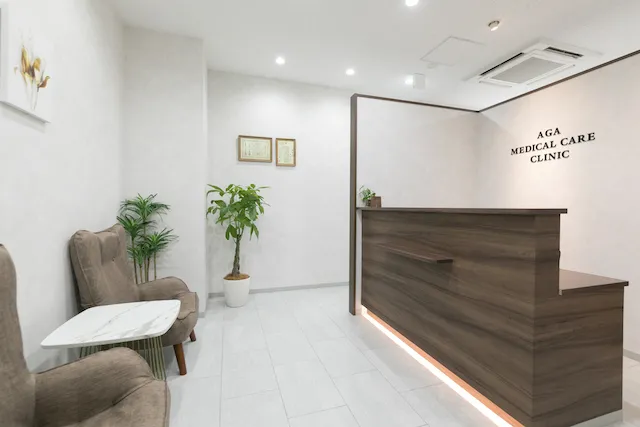
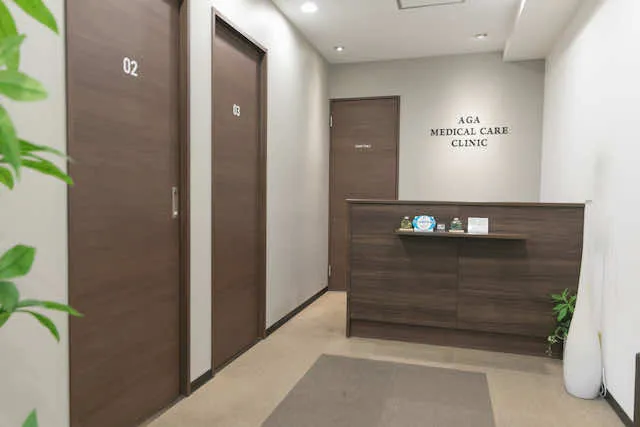
At AGA Medical Care Clinic in Tokyo and Yokohama, our doctors provide in-person consultations for short-term visitors. During your visit, we will examine your scalp, and you will receive a consent form, medication instructions, and medical records in English.
Once your treatment results have stabilized, you may request an online follow-up after returning home, subject to the doctor’s approval. Please note that the online follow-up will cover the consultation only, and the clinic does not ship medication.
Frequently asked questions
- Do I need a prescription for finasteride or dutasteride in Japan?
-
In Japan, these oral medications require a doctor’s prescription. The doctor evaluates your condition to determine if one is appropriate and then issues the prescription.
- Can visitors use public health insurance for hair loss treatment in Japan?
-
No treatment for male pattern hair loss is covered in Japan, so both visitors and residents must pay out of pocket. Before booking a visit, ask the clinic for a detailed estimate.
- Does Thailand’s “dangerous drug” category mean the medicine is harmful?
-
Not by itself. The term names a legal category in the Thai drug law and does not describe how safe the medicine is. Products in this category may be sold only while a pharmacist is on duty and are dispensed under a pharmacist’s control.
- What should I bring home after treatment in either country?
-
Request an English summary that includes the diagnosis, active ingredient names, directions, and a proposed follow-up timeline. Show this summary to your doctor at home before you refill, stop, or change any treatment.
References
1. Kanti, V., Messenger, A., Dobos, G., Reygagne, P., Finner, A., Blumeyer, A., Trakatelli, M., Tosti, A., Del Marmol, V., Piraccini, B. M., Nast, A., & Blume-Peytavi, U. (2018). Evidence-based (S3) guideline for the treatment of androgenetic alopecia in women and in men – short version. Journal of the European Academy of Dermatology and Venereology, 32(1), 11-22. https://doi.org/10.1111/jdv.14624
2. Suchonwanit, P., Srisuwanwattana, P., Chalermroj, N., & Khunkhet, S. (2018). A randomized, double-blind controlled study of the efficacy and safety of topical solution of 0.25% finasteride admixed with 3% minoxidil vs. 3% minoxidil solution in the treatment of male androgenetic alopecia. Journal of the European Academy of Dermatology and Venereology, 32(12), 2257-2263. https://doi.org/10.1111/jdv.15171
3. Verra, S. E., Kroeze, R., & Ruggeri, K. (2016). Facilitating safe and successful cross-border healthcare in the European Union. Health Policy, 120(6), 718-27. https://doi.org/10.1016/j.healthpol.2016.04.014
Manabe, M., Tsuboi, R., Itami, S., Osada, S. I., Amoh, Y., Ito, T., Inui, S., Ueki, R., Ohyama, M., Kurata, S., Kono, T., Saito, N., Sato, A., Shimomura, Y., Nakamura, M., Narusawa, H., Yamazaki, M., & Drafting Committee for the Guidelines for the Diagnosis and Treatment of Male- and Female-Pattern Hair Loss (2018). Guidelines for the diagnosis and treatment of male-pattern and female-pattern hair loss, 2017 version. The Journal of Dermatology, 45(9), 1031-1043. https://doi.org/10.1111/1346-8138.14470
Varothai, S., & Bergfeld, W. F. (2014). Androgenetic alopecia: An evidence-based treatment update. American Journal of Clinical Dermatology, 15(3), 217-230. https://doi.org/10.1007/s40257-014-0077-5
Nichol, B., Ray, D., Tanner, L., Oliver, E. J., Vlaev, I., Sniehotta, F., & McGowan, L. (2026). Decision-making about bariatric and cosmetic medical tourism from countries with universal healthcare: a rapid systematic review. Globalization and Health, 22(1), 45. https://doi.org/10.1186/s12992-026-01207-x
Foley, B. M., Haglin, J. M., Tanzer, J. R., & Eltorai, A. E. M. (2019). Patient care without borders: a systematic review of medical and surgical tourism. Journal of Travel Medicine, 26(6). https://doi.org/10.1093/jtm/taz049