A doctor at a Japanese hair loss clinic must hold a Japanese medical license, and you can verify it yourself, even from outside Japan. Japan’s health ministry runs a free public physician qualification search.
You enter the doctor’s full name in Japanese script, and the search matches it against the registry. Next, read any specialty title by the body that granted it, not by the title alone.
A specialty title shows that a doctor completed standard training and passed an exam, but it does not tell you how well the doctor will treat your condition. These checks are worth doing before you book, whether you live in Japan or are choosing a clinic from abroad.
Start with the physician license search
The national search indicates whether a doctor is listed in Japan’s most recent physician registration. The data comes from reports doctors submit every two years, not from clinic websites.
This search does not provide information about the doctor’s schedule, language abilities, or performance results. Consider it the first step in verifying a doctor’s credentials.
Use the Japanese name and exact order
The system requires the doctor’s name in Japanese characters and their sex. Entering only a surname or given name will not provide results, and Roman letters won’t work. Ask the clinic for the correct name spelling, including both the surname and given name with a space in between.
- Ask the clinic for the doctor’s full name in Japanese script.
- Open the health ministry’s physician qualification search.
- Enter the surname, a space, then the given name.
- Select the doctor’s sex and review the result.
If the search shows no result
If you cannot find a doctor’s registration, they may not have completed their most recent two-year registration filing. Additionally, the clinic might list an outdated surname, a registered alias, or may have different word order for the name.
A small number of older or special historical registrations are outside the searchable records, and some names are excluded for administrative reasons. If you cannot find the doctor, ask the clinic to confirm the spelling.
Check who granted a specialty credential
When a clinic refers to a doctor as a specialist or certified physician, identify the organization that granted that designation.
Japan’s advertising guidelines require clinics to specify their governing body, such as the Japanese Medical Specialty Board or an academic society. This body indicates the field of practice and the standards that the title represents.
A small 2022 survey at a U.S. plastic surgery practice found that many patients did not understand provider credentials. They valued a surgeon’s experience most, followed by board certification.1
A U.S. study of online advertising found that “specialist” wording may be used with certification from another body.2 These findings come from the U.S., but the lesson applies universally: verify the organization that granted the title and in what field.
What a dermatology credential shows
Dermatology is one basic specialty area in Japan. A dermatologist has completed a supervised training program and passed the specialty examination, and certification generally must be renewed every five years.
Diagnosing hair loss depends on a history and a scalp exam, which is central to dermatology training.
A doctor, not a counselor or front-desk staff member, should examine your scalp and make the diagnosis. Male pattern hair loss is one possible diagnosis, but hair loss has other causes too.
A doctor in another field can still evaluate male pattern hair loss. The absence of a dermatology credential alone is not a reason to reject a clinic.
Read the label wording closely
Check the words on the same line as the title. A bare “specialist” title without an associated organization does not indicate who certified the doctor.
| Check | What it shows | What it cannot show |
|---|---|---|
| Medical license search | Whether the name appears in Japan’s recent physician registration filing | Current practice, language support, or treatment results |
| Specialty label | The certifying body and specialty field | The result in your specific case |
| Career details | School, degree, license date, and past workplaces | Full training history or current quality of care |
These checks don’t assess a doctor’s proficiency. Review them together: the license search verifies registration, the specialty body outlines training, and the career profile shows years of practice. If anything is unclear, ask the clinic for clarification before paying for a visit.
Clinic listings that add to a credentials check
After checking the doctor, you can confirm that the clinic reports its services in Japan’s national medical information system. Medical Information Net has been running nationwide since April 2024 and lets users search by department, treatment, and service details.
Search by department and treatment rather than by a doctor’s name, since this is a directory of medical facilities, not a license registry. It can show whether a clinic lists dermatology or hair loss care, but it does not confirm that each doctor on staff passed a specialty exam.
A short checklist before you contact a clinic
Write down the doctor’s name in Roman characters, then ask the clinic for the Japanese version. Next, check the national license registry to find out which organization granted any specialty titles. With this information, you can complete the verification process from home.
When a listing is unclear, ask the clinic to put the certifying body in writing. You do not need to judge the title medically; you only need to know what was certified and by whom.
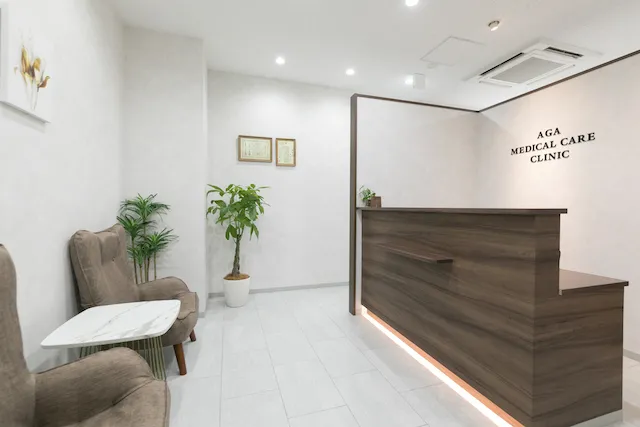
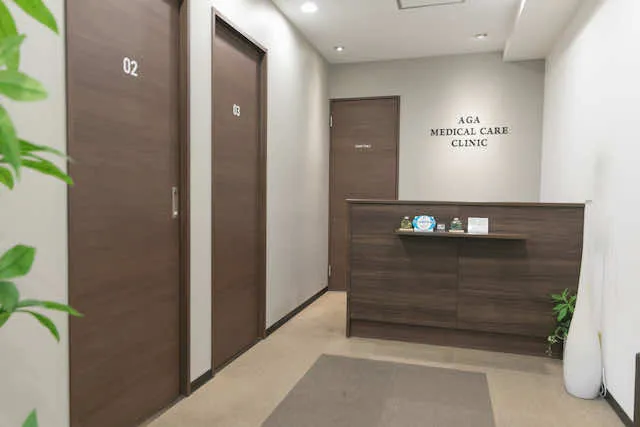
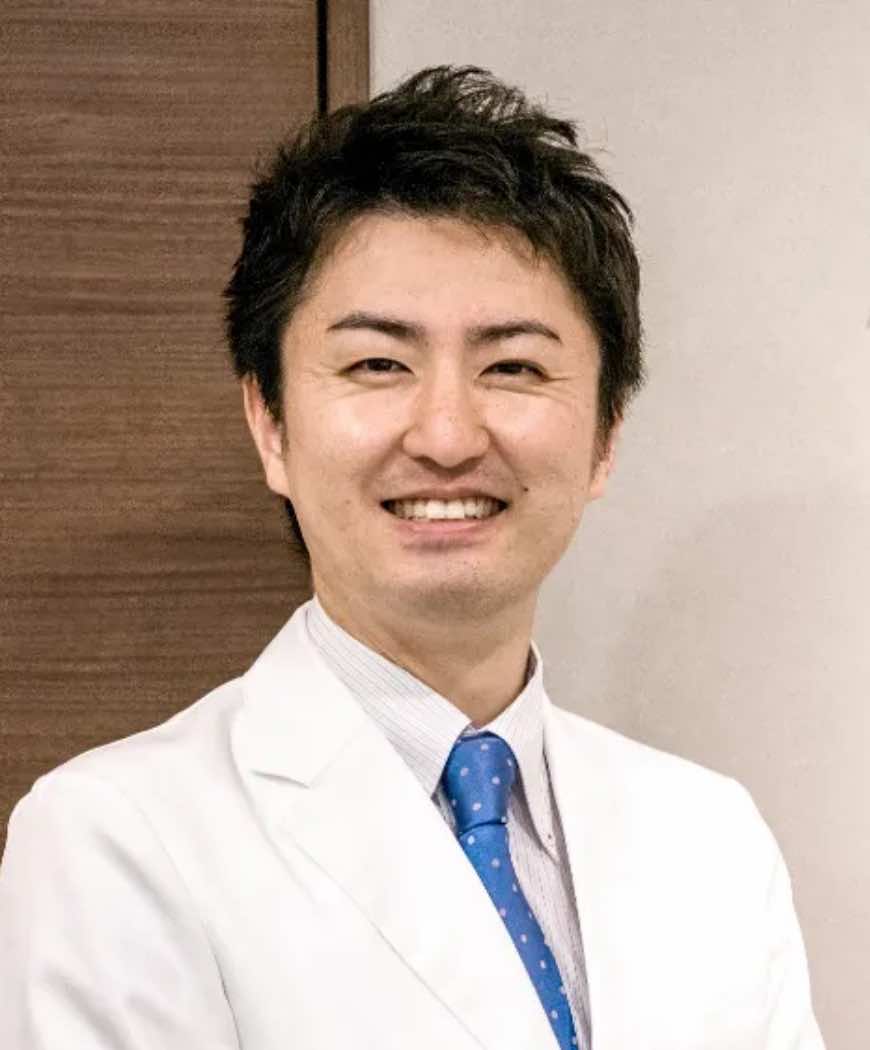
At AGA Medical Care Clinic in Tokyo and Yokohama, several doctors see patients, and each patient has an assigned doctor. You can review our medical director’s career on the Our Doctor page.
Frequently asked questions
- Can I check a Japanese doctor’s license from outside Japan?
-
Yes. Japan’s health ministry runs a free online physician qualification search. It requires the doctor’s name in Japanese script. Ask the clinic for that spelling before you search.
- Does seeing a dermatologist guarantee better hair results?
-
No. A dermatology credential shows that a doctor completed the required training and passed an exam, but it does not promise a particular result. It helps you identify the certifying body, but the doctor’s examination and the treatment plan matter more for your case.
- Why does the clinic list the doctor’s name only in Roman letters?
-
English pages often romanize Japanese names for readability. The national search needs a different input. Ask for the Japanese surname and given name with a space between them. Having both forms also makes it easier to compare the profile with the registry result.
- What should I do if the name does not appear in the search?
-
Ask the clinic for the exact Japanese spelling and any registered alias or old surname. A missing result can come from a skipped two-year report or a spelling difference. Confirm those details before deciding whether to book or look elsewhere.
References
1. Parus, A., Hartmann, T., Foley, B. J., & Plank, D. M. (2022). Patient Understanding of Provider Credentials and Selection of Plastic Surgery Providers. Annals of Plastic Surgery, 89(2), 143-147. https://doi.org/10.1097/SAP.0000000000003133
2. Chen, S., Makhoul, A. T., Janis, J. E., Perdikis, G., & Drolet, B. C. (2022). Board Certification in Cosmetic Surgery: An Examination of Online Advertising Practices. Annals of Plastic Surgery, 88(5 Suppl 5), S461-S465. https://doi.org/10.1097/SAP.0000000000003120
Manabe, M., Tsuboi, R., Itami, S., Osada, S. I., Amoh, Y., Ito, T., Inui, S., Ueki, R., Ohyama, M., Kurata, S., Kono, T., Saito, N., Sato, A., Shimomura, Y., Nakamura, M., Narusawa, H., Yamazaki, M., & Drafting Committee for the Guidelines for the Diagnosis and Treatment of Male- and Female-Pattern Hair Loss (2018). Guidelines for the diagnosis and treatment of male-pattern and female-pattern hair loss, 2017 version. The Journal of Dermatology, 45(9), 1031-1043. https://doi.org/10.1111/1346-8138.14470
Mubki, T., Rudnicka, L., Olszewska, M., & Shapiro, J. (2014). Evaluation and diagnosis of the hair loss patient: part I. History and clinical examination. Journal of the American Academy of Dermatology, 71(3), 415.e1-415.e15. https://doi.org/10.1016/j.jaad.2014.04.070
Mubki, T., Rudnicka, L., Olszewska, M., & Shapiro, J. (2014). Evaluation and diagnosis of the hair loss patient: part II. Trichoscopic and laboratory evaluations. Journal of the American Academy of Dermatology, 71(3), 431.e1-431.e11. https://doi.org/10.1016/j.jaad.2014.05.008
Alessandrini, A., Bruni, F., Piraccini, B. M., & Starace, M. (2021). Common causes of hair loss – clinical manifestations, trichoscopy and therapy. Journal of the European Academy of Dermatology and Venereology, 35(3), 629-640. https://doi.org/10.1111/jdv.17079
Pirmez, R. (2023). The dermatoscope in the hair clinic: Trichoscopy of scarring and nonscarring alopecia. Journal of the American Academy of Dermatology, 89(2S), S9-S15. https://doi.org/10.1016/j.jaad.2023.04.033
Wolff, H., Fischer, T. W., & Blume-Peytavi, U. (2016). The Diagnosis and Treatment of Hair and Scalp Diseases. Deutsches Arzteblatt International, 113(21), 377-86. https://doi.org/10.3238/arztebl.2016.0377