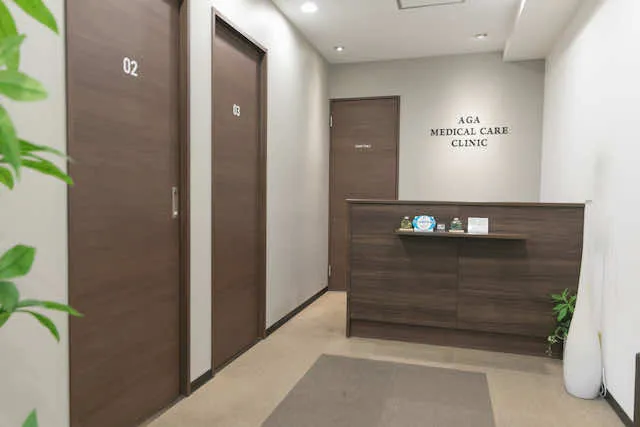

Some hair loss clinics in Japan provide English consent forms, while others only offer forms in Japanese. Ask about this before booking, as each clinic has its own policy.
If a clinic does not have an English version of the consent form, you can still sign with confidence by requesting a spoken explanation and then repeating the plan back in your own words.
English consent forms depend on the clinic
No national rule requires clinics to provide an English version. Confirm this before your visit. Japan’s health ministry provides a generic consent form for treatment and examination, available in English and 12 other languages, with Japanese printed alongside each translation.
This form is designed for general use and is not specifically created for hair loss treatment. Each clinic may decide whether to use this form.
What the consent discussion should cover
A consent form is just one part of the process; the doctor’s explanation is equally important.
The written form
Inquire which sections of the form will be available in English and whether the Japanese text will also be included. If the clinic uses the government’s bilingual form, make sure the doctor explains the specific treatment you will receive, not just a general interpretation of the form.
The spoken explanation
The signature is less important than the surrounding conversation. Before agreeing, ensure you can explain each point in your own words.
- The expected effect of the treatment
- Possible side effects and complications
- What is known about the safety and effectiveness of the treatment
- The other treatment options that were discussed
How language gaps affect understanding of consent
You might read a form and still misunderstand its meaning. A professional interpreter or a clinician who speaks your language can improve your understanding of consent, but you may still forget some details afterward.
In a 2023 survey of 363 non-native Japanese speakers who received care in Japan, respondents with a language mismatch reported lower comprehension and were more likely to request a professional interpreter (odds ratio 4.73).1
When a U.S. hospital improved access to bedside interpreter phones, the percentage of patients with limited English proficiency who felt they received sufficient explanations before undergoing invasive procedures increased from 29% to 54%. However, a gap still persisted between these patients and English speakers.2
When a professional interpreter is unavailable, some surgeons turn to family members or friends for help during the surgical consent process. Experienced medical interpreters often suggest using simpler language and avoiding legal jargon when translating consent forms.
A randomized study of 121 healthy adults found that machine-translated cancer treatment booklets contained 11 errors that changed meaning, compared with just 1 error in professionally translated materials.
Additionally, when a bilingual consent form was used with an interpreter, patients demonstrated a better understanding of the treatment’s purpose, with an adjusted odds ratio of 3.73..3
Even individuals who speak the same language as their doctor can forget important details. A study of 100 English-speaking orthopedic surgery patients found that the average correct-answer rate was 70.7% immediately after consent and dropped to 59.5% at the first follow-up visit.4
In another survey, skin surgery patients believed they understood their condition better than they actually did in 44% of responses and underestimated their understanding in 17%.5 One effective way to identify any gaps in understanding is to explain the plan in your own words.
What to do when only a Japanese form is available
A Japanese-only form does not justify signing without understanding. Make sure you fully understand the content before agreeing to it.
Check each document before you sign
The same approach applies to the questionnaire and written treatment instructions, in addition to the consent form.
| Document | What to ask | Fallback if no English copy is available |
|---|---|---|
| Medical questionnaire | Ask whether an English version is available or whether staff can help answer each question. | Ask staff to read each question aloud and explain what it is asking. |
| Consent form | Ask whether an English or bilingual consent form is available. | Ask the doctor to go through each section and explain the key risks and choices. |
| Treatment instructions | Ask whether the doctor will provide written aftercare and medication instructions in English. | Take notes from a spoken summary and repeat the steps back. |
Before you sign a Japanese form
- Ask the doctor to explain the document section by section.
- Ask what each part means for your care and your choices.
- Repeat the treatment plan back in your own words.
- Wait to sign until the explanation feels clear.
If you are planning to receive care with us, we can provide consent forms, medication instructions, and medical records in English. At our clinics in Tokyo and Yokohama, our doctor will explain your treatment plan during your visit. You can also submit any questions you have in advance using the Contact Us form.
Frequently asked questions
- Will every clinic give me an English consent form?
-
No. Some clinics prepare English or bilingual forms, and others use Japanese forms with a verbal explanation. Japan’s health ministry publishes a generic bilingual consent form, but using it is optional. Ask each clinic before you book.
- What should I do if only a Japanese consent form is available?
-
Ask the doctor to go through each section in English and explain the expected effect, risks, and other options. Repeat the plan in your own words, and wait to sign until you understand it.
- Can I use a translation app for the consent form?
-
A translation app can help with a single word or short phrase, but it is not a reliable substitute for a reviewed consent form. Machine-translated documents can contain meaning-changing errors. Ask the clinic for an official translation or a professional interpreter.
- Can I get English consent paperwork at your clinic?
-
Yes. We can issue consent forms, medication instructions, and medical records in English. To ask whether an English questionnaire is available, use the Contact Us form.
References
1. Oonishi, A., Ikeda, A., Francois, N., & Ono, N. (2023). Relationship Between Patient-Provider Language Discordance and the Need for Professional Medical Interpretation for International Patients in Japan. Cureus, 15(10), e47001. https://doi.org/10.7759/cureus.47001
2. Lee, J. S., Pérez-Stable, E. J., Gregorich, S. E., Crawford, M. H., Green, A., Livaudais-Toman, J., & Karliner, L. S. (2017). Increased Access to Professional Interpreters in the Hospital Improves Informed Consent for Patients with Limited English Proficiency. Journal of General Internal Medicine, 32(8), 863-870. https://doi.org/10.1007/s11606-017-3983-4
3. Hibbs, S. P., Nizam, R., Tanzim, U., Aiken, L., Habib, S., Hodgson, S., Williams, J., Januszewski, A., Hantel, A., Uddin, M. S., Isaacs, T., Bajaj, B., Cockburn, O., Islam, A., Pratt, G., & Federici, F. M. (2026). Translation approaches to support systemic anti-cancer therapy consent for individuals with limited English proficiency. Supportive Care in Cancer, 34(4). https://doi.org/10.1007/s00520-026-10464-w
4. Crepeau, A. E., McKinney, B. I., Fox-Ryvicker, M., Castelli, J., Penna, J., & Wang, E. D. (2011). Prospective evaluation of patient comprehension of informed consent. The Journal of Bone and Joint Surgery American Volume, 93(19), e114(1-7). https://doi.org/10.2106/JBJS.J.01325
5. Chow, P., Neill, B., Seger, E., Siscos, S., Rickstrew, J., Graham, I., Rajpara, A., & Hocker, T. (2021). Patients Frequently Overestimate Their Comprehension of Common Mohs Micrographic Surgery Terms: A Cross-Sectional Survey. Journal of Drugs in Dermatology, 20(11), 1252-1254. https://doi.org/10.36849/jdd.6174
Luan-Erfe, B. M., Erfe, J. M., DeCaria, B., & Okocha, O. (2023). Limited English Proficiency and Perioperative Patient-Centered Outcomes: A Systematic Review. Anesthesia and Analgesia, 136(6), 1096-1106. https://doi.org/10.1213/ANE.0000000000006159
Patel, D. N., Wakeam, E., Genoff, M., Mujawar, I., Ashley, S. W., & Diamond, L. C. (2016). Preoperative consent for patients with limited English proficiency. The Journal of Surgical Research, 200(2), 514-22. https://doi.org/10.1016/j.jss.2015.09.033
Allar, B. G., Ponce, C., Wallace, J., Ortega, G., Reich, A. J., Gold-Gomez, S., Gangadharan, S. P., & Kent, T. S. (2024). A Conduit for a Culturally Competent Consent: Medical Interpreters’ Perspectives on Surgical Informed Consent Discussions. Annals of Surgery, 280(1), 66-74. https://doi.org/10.1097/SLA.0000000000006160