
According to guidance from the Ministry of Health, Labor and Welfare, travelers can bring a one-month supply of most prescription medicines into Japan for personal use without applying in advance.
Hair loss prescriptions typically fall under this rule, as long as the active ingredient is not a controlled substance and the quantity matches your prescribed dose. If you need to bring a larger supply, you must obtain an import confirmation before your flight.
Prescription medicines you can bring without advance paperwork
Japan allows individuals to bring a one-month supply of most prescription medications without an import confirmation, provided the medicine is for personal use and is not a prohibited or specially controlled substance.
Limits by medicine type
| Category | Limit or rule | What to do before travel |
|---|---|---|
| Prescription medicine | Up to 1 month supply | No import confirmation. |
| Prescription medicine | More than 1 month supply | Apply for import confirmation before departure. |
| Nonprescription external medicine | Up to 24 units per item | No import confirmation. |
| Other drugs and quasi-drugs | Up to 2 months supply | No import confirmation. |
| Controlled medicines | Separate restrictions | Check the active ingredient and requirements before booking. |
How the one-month limit is counted
The limit depends on your prescribed dosage. A one-month supply could be 30 tablets for one person and 60 tablets for another. Count the amount your doctor prescribed for the month, not what fits into a single bottle.
When a one-month supply is not enough
You can bring more than a one-month supply, but you must apply for an import confirmation and receive it before leaving home. Show the certificate upon arrival only if a customs officer requests it.
Documents to prepare before you apply
The application requires two documents: one linking the medicine to you and your doctor, and another showing your arrival.
- A valid prescription or doctor’s note showing your name, the medicine name, and the doctor’s name.
- A document from the airline or cruise company showing your arrival date, airport or port, flight number, and passenger name.
Filing the application and receiving the certificate
Attach these documents to the online application. If the form is complete, you should receive the certificate via email within a few business days, excluding weekends and national holidays. Do not modify or change the certificate in any way, as any alterations may render it invalid.
How to pack your medicines for Japan
The pharmacy label and a copy of the prescription help identify your medicine easily. Whenever possible, keep each prescription medicine in its original pharmacy container and carry paper copies even if you also have digital ones.
What to keep with your prescription
- The original pharmacy container with the label intact.
- A copy of each prescription or doctor’s note.
- A list showing the brand name, generic name, manufacturer, and dosage.
- Enough medicine for the full trip plus a little extra in case of delays.
When the category is unclear
If you are unsure whether your medication is classified as a prescription drug, an external-use product, or a controlled substance, email the pharmaceutical inspector’s office associated with your arrival airport. Be sure to include:
- Arrival airport
- Product name of the medicine
- Active ingredient and strength per tablet or unit
- Form of the medicine, such as tablets or vials
- Amount you plan to bring, in months of supply or number of tablets
Controlled medicines need a separate check
Medicines that contain narcotics, psychotropics, or stimulant ingredients are subject to stricter regulations. You may need permission before traveling, and some of these medications may not be permitted to enter Japan at all.
Consult your prescribing doctor about the specific ingredients, and verify the regulations with Japan’s health authorities before finalizing your travel plans.
Check both sides of the trip
Your home country may restrict the medicines you can take abroad, and it may have specific requirements for bringing leftover medicine back. Confirm both with your prescribing doctor and your country’s authorities.
Planning a daily hair loss prescription around travel
Hair loss medications are typically taken daily, with effects building over several months. Make sure you have enough supply to avoid a gap during your trip.
Why continuity matters
A meta-analysis of finasteride 1 mg per day reported that total hair count was 12.4 hairs/cm2 higher than placebo at 24 weeks and 16.4 hairs/cm2 higher at 48 weeks.1
A systematic review of 12 trials involving 3,927 men also found that more men reported improvement with finasteride than with placebo over short- and long-term follow-up.2
A 1998 report on 1,553 men with male pattern hair loss found higher hair counts with finasteride than with placebo after one and two years.3
Counting by days, not bottles
Travel medicine guidance recommends a health review before the trip for people who take regular medicine, with written advice to take with you. Air-travel guidance also suggests checking how much medicine you carry and when you take it before you fly.
Depending on your dosage, one bottle may last more or less than a month. Count your supply in days, including any possible delays.
If your total supply exceeds one month, start the import confirmation early, since weekends and holidays aren’t business days. Also, ask your prescribing doctor how to schedule doses across different time zones.
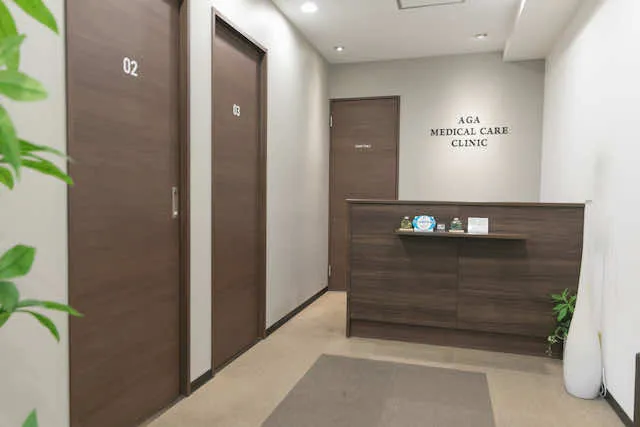
If you are currently taking hair loss medication and wish to continue your treatment during your visit, our doctor will listen to your concerns and review your treatment history during a consultation at our clinics in Tokyo and Yokohama. Before your trip, feel free to send any questions you may have using the contact form.
Frequently asked questions
- Can I bring more than a one-month supply of finasteride into Japan?
-
To import medication into Japan, you must apply for import confirmation before you arrive. You will need to provide a prescription or a doctor’s note, as well as a document from your airline or cruise company that includes your arrival details. Be prepared to show the certificate to customs if requested.
- Do I need to keep my hair loss medicine in the original bottle?
-
The original pharmacy container clearly shows that the medicine is prescribed for you. Keep it with a copy of the prescription, along with a list that includes the generic name, brand name, manufacturer, and dosage.
- What if my hair loss medicine is classified as a controlled substance?
-
Certain controlled medications may only be brought into Japan with prior permission from the country’s health authorities, while others are entirely prohibited.
It’s advisable to have the prescribing doctor review the active ingredient of the medication and then verify the current regulations with the Ministry of Health, Labour and Welfare.
- Should I do anything about my hair loss medicine before booking flights?
-
Yes, please count the number of days’ worth of medication you need. Check the active ingredient against Japan’s entry rules and confirm the dosing schedule with your prescribing doctor. If you exceed the no-paperwork limit, allow enough time to complete the application.
References
1. Gupta, A. K., Venkataraman, M., Talukder, M., & Bamimore, M. A. (2022). Finasteride for hair loss: a review. The Journal of Dermatological Treatment, 33(4), 1938-1946. https://doi.org/10.1080/09546634.2021.1959506
2. Mella, J. M., Perret, M. C., Manzotti, M., Catalano, H. N., & Guyatt, G. (2010). Efficacy and safety of finasteride therapy for androgenetic alopecia: a systematic review. Archives of Dermatology, 146(10), 1141-50. https://doi.org/10.1001/archdermatol.2010.256
3. Kaufman, K. D., Olsen, E. A., Whiting, D., Savin, R., DeVillez, R., Bergfeld, W., Price, V. H., Van Neste, D., Roberts, J. L., Hordinsky, M., Shapiro, J., Binkowitz, B., & Gormley, G. J. (1998). Finasteride in the treatment of men with androgenetic alopecia. Finasteride Male Pattern Hair Loss Study Group. Journal of the American Academy of Dermatology, 39(4 Pt 1), 578-89. https://doi.org/10.1016/s0190-9622(98)70007-6
Spira, A. M. (2003). Preparing the traveller. Lancet, 361(9366), 1368-81. https://doi.org/10.1016/S0140-6736(03)13075-9
Wendt, S., Beier, D., Paquet, D., Trawinski, H., Fuchs, A., & Lübbert, C. (2021). Medical Advice for Travelers. Deutsches Arzteblatt International, 118(21), 349–356. https://doi.org/10.3238/arztebl.m2021.0127
Thibeault, C., Evans, A. D., & Dowdall, N. P. (2015). AsMA Medical Guidelines for Air Travel: Fitness to Fly and Medical Clearances. Aerospace Medicine and Human Performance, 86(7), 656. https://doi.org/10.3357/AMHP.4222.2015