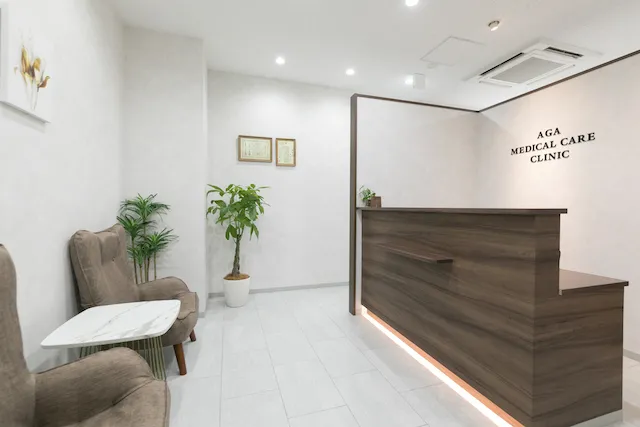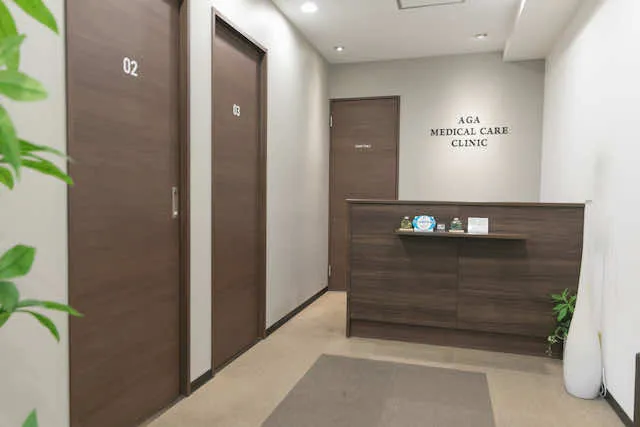

A first visit at a Japanese hair loss clinic can be quieter and more focused than many people expect. From reception, you enter a private room for hair photographs and a magnified scalp exam, then speak with a counselor and meet the doctor.
The visit can end with treatment that day or with a plan you take home to consider. At AGA Medical Care Clinic, no other patients will encounter you after you arrive. The staff follows a clear process, and no one pressures you to begin until you are ready.
What your first visit includes
During your first visit to our clinics, you will receive a private check-in, hair photos, a magnified examination of your scalp and hair, a discussion with a counselor, and a doctor’s examination.
The flow from arrival to checkout
| Stage | What happens | What you do |
|---|---|---|
| Arrival | Staff takes you straight to a private room. | Give a brief medical history. |
| Photos and microscope | The team photographs only your hair and checks the scalp under magnification. | Point out your areas of concern. |
| Counseling and exam | A certified hair counselor listens, then a doctor examines your scalp. | Describe your goals and health background. |
| Blood draw | Added only if you begin treatment that day. | Choose same-day or later treatment. |
| Checkout | You leave with a plan or oral medicine. | Decide when to return. |
Every step keeps your visit confidential while giving the doctor enough information to make treatment decisions.
Photos and a closer look at your scalp
The clinic begins by using two tools: regular photographs of your hair and a microscope that magnifies the scalp and hair strands.
What the magnified scalp exam adds
A close examination can reveal a characteristic of male pattern hair loss: adjacent hairs that vary significantly in thickness. A 2024 review of 34 studies found this sign in about 94% of people with androgenetic alopecia.1
The first step in diagnosing hair loss involves taking a medical history and conducting a physical examination; laboratory tests are often not needed. Using a microscope can provide detailed images that a standard photograph cannot capture, but it is not a substitute for a doctor’s hands-on examination.
Counseling and the doctor’s exam
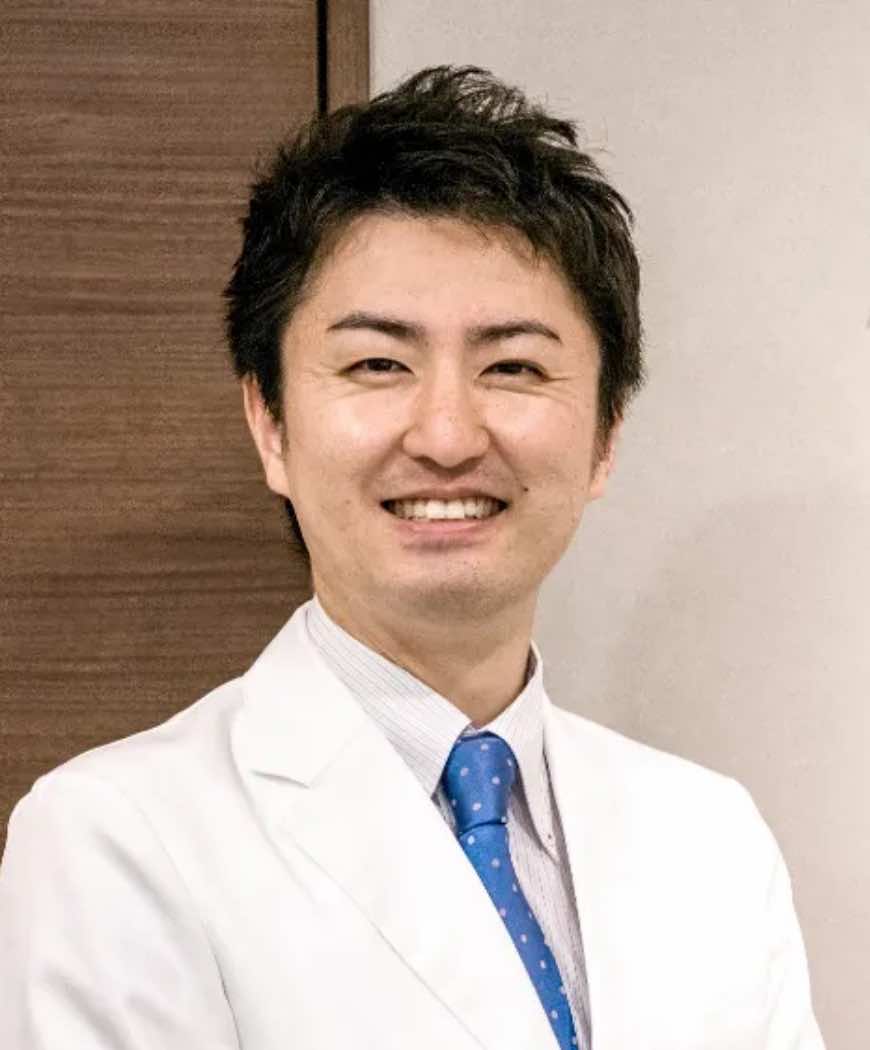
After the photos, a certified hair counselor meets with you, and a doctor examines your scalp in person. The same doctor stays with you during later visits, and this discussion starts a plan rather than a one-time screening.
The counselor will first ask when you started noticing thinning, what treatments you have tried, and which changes concern you the most.
The doctor will then use this history, along with the photographs and microscope findings, to determine whether the hair loss pattern resembles male pattern baldness or indicates another issue.
You don’t need a detailed explanation or medical terminology. Since your current health and any medications you take can affect which options are best for you, the team will ask about both.
What you can decide at your first visit
You don’t have to make all your decisions during your first visit. You can begin treatment that day, take the findings home, or opt for the optional genetic test.
If you begin treatment that day, you will first have a blood draw so your doctor can assess your general health and monitor for side effects. You can then take oral medication home the same day.
- Start treatment that day and take oral medicine home.
- Take the consultation findings and decide at home.
- Add the optional genetic test and return for results.
- Plan platelet-rich plasma, or PRP, for a later injection visit.
Tests and treatments that need a second visit
Both the optional genetic test and PRP treatment will necessitate at least one additional visit. This ensures we can provide the most accurate results and effective care.
Optional genetic testing
At our clinic, the genetic test is optional. We collect the sample with a cotton swab, gently rub it inside your cheek, and send it to an external laboratory. Results typically take two to three weeks, and a doctor will explain them to you during a follow-up visit.
The evidence behind this type of testing is still mixed. One study of 488 men found that fewer androgen receptor gene repeats were associated with greater improvement after oral finasteride.2 A smaller study of 25 men found no association for CAG repeats, while fewer GGC repeats were linked to a better response.3
The test can provide information, but it cannot accurately predict your results or guarantee that any treatment will be effective. Your doctor will consider this test along with the scalp examination and your medical history.
PRP and the follow-up visit
Platelet-rich plasma (PRP) is created from a sample of your own blood. If the doctor determines that PRP is appropriate during your examination, the injection will be scheduled for a later visit, as the blood needs to be processed after the appointment.
Across six small trials with 177 people, PRP injections increased hair density by 17.90 hairs per square centimeter compared with controls, but the percentage increase was not statistically significant.4 The trials were small, and the average result does not indicate how much hair you could regrow.
At our clinics in Tokyo and Yokohama, the doctor will explain the next steps before you leave. You can ask questions and decide when to begin.
Frequently asked questions
- Do I have to start treatment at my first visit?
-
No. You can end the first visit with the consultation, the doctor’s exam, and the photographs, then decide at home. If you want to begin later, the clinic can schedule the next step when you are ready.
- Will I be seen in a private room?
-
At AGA Medical Care Clinic, patients are taken to a private room upon arrival and do not interact with other patients. The photographs show only your hair and do not include your face.
- Is the genetic test required?
-
The test is optional and is conducted using a cheek swab. Results typically take two to three weeks, which the doctor discusses at a follow-up visit.
- Can PRP be done on the day of the first visit?
-
No, the doctor determines if PRP is appropriate during the examination. However, an external partner handles the blood processing, and the injection is scheduled for a follow-up visit.
References
1. Kuczara, A., Waśkiel-Burnat, A., Rakowska, A., Olszewska, M., & Rudnicka, L. (2024). Trichoscopy of Androgenetic Alopecia: A Systematic Review. Journal of Clinical Medicine, 13(7). https://doi.org/10.3390/jcm13071962
2. Wakisaka, N., Taira, Y., Ishikawa, M., Nakamizo, Y., Kobayashi, K., Uwabu, M., Fukuda, Y., Taguchi, Y., Hama, T., & Kawakami, M. (2005). Effectiveness of finasteride on patients with male pattern baldness who have different androgen receptor gene polymorphism. The Journal of Investigative Dermatology. Symposium Proceedings, 10(3), 293-4. https://doi.org/10.1111/j.0022-202X.2005.10123.x
3. Ghassemi, M., Ghaffarpour, G. H., & Ghods, S. (2019). The effect of GGC and CAG repeat polymorphisms on the androgen receptor gene in response to finasteride therapy in men with androgenetic alopecia. Journal of Research in Medical Sciences, 24, 104. https://doi.org/10.4103/jrms.JRMS_27_19
4. Giordano, S., Romeo, M., & Lankinen, P. (2017). Platelet-rich plasma for androgenetic alopecia: Does it work? Evidence from meta analysis. Journal of Cosmetic Dermatology, 16(3), 374-381. https://doi.org/10.1111/jocd.12331
Mubki, T., Rudnicka, L., Olszewska, M., & Shapiro, J. (2014). Evaluation and diagnosis of the hair loss patient: part II. Trichoscopic and laboratory evaluations. Journal of the American Academy of Dermatology, 71(3), 431.e1-431.e11. https://doi.org/10.1016/j.jaad.2014.05.008
Alessandrini, A., Bruni, F., Piraccini, B. M., & Starace, M. (2021). Common causes of hair loss – clinical manifestations, trichoscopy and therapy. Journal of the European Academy of Dermatology and Venereology, 35(3), 629-640. https://doi.org/10.1111/jdv.17079
Liu, Y., Tosti, A., Wang, E. C. E., Heilmann-Heimbach, S., Aguh, C., Jimenez, F., Lin, S. J., Kwon, O., & Plikus, M. V. (2025). Androgenetic alopecia. Nature Reviews. Disease Primers, 11(1), 73. https://doi.org/10.1038/s41572-025-00656-9