A phone translation app can help you check in, schedule appointments, and ask basic questions at a Japanese hair loss clinic. However, it is not reliable enough to manage the medical aspects of your visit on its own.
You should consult the doctor to confirm treatment options, consent, and medication instructions. Use the app to verify your understanding, but rely on the doctor’s explanations for medical decisions.
What a phone translation app can handle
Translation apps are most effective when the stakes are low and the sentences are short. They can help with simple tasks such as stating your name, confirming an appointment time, asking for directions to the reception desk, and briefly describing hair thinning or medication use.
In these situations, an app can significantly ease the process of visiting a clinic in Japan.
Match the tool to the conversation
Some clinic conversations can be safely initiated with an app, while others require a person to clarify their meaning.
| Situation | What a translation app can do | What to add |
|---|---|---|
| Greetings and schedule | Check arrival time, reception, or the next visit | Point to the screen and confirm the details aloud |
| Symptoms | Start a short description | Show where the hair is thinning or when the change began |
| Treatment and medication | Offer a rough version | Have the doctor confirm the name, dose, and directions |
| Consent forms | Read headings and short phrases | Do not sign until the doctor has confirmed the full meaning |
When a person needs to step in
Treatment decisions, consent, and medication instructions require more than just a translation app. Japan’s health ministry advises medical institutions to limit translation tools to casual conversations and to be cautious about potential mistranslations.
Even a fluent translation can misrepresent vital information, such as dosages, side effects, or important questions.
Treatment decisions and consent
Do not agree to treatment based solely on an app’s translation. For forms, diagnoses, or medication schedules, ask the doctor to confirm the details in English.
Ask for the medication name, dosage, how often to take it, and which side effects to watch for. Afterward, repeat the information in your own words to ensure you understand it correctly.
Using a translation app safely
These habits allow for a slower conversation, giving us the opportunity to catch errors before they lead to decisions.
Three checks to reduce risk
- Back-translate the sentence. Translate it back into the original language, then compare that version with the original text.
- Keep each message short. Use simple, complete sentences instead of long paragraphs, idioms, or shorthand.
- Show the screen. Confirm diagnosis names, drug names, directions, and side effects with the doctor, then repeat the meaning in your own words.
How accurate is machine translation?
Translation accuracy varies by language pair; don’t rely on it alone for medical decisions.
Results vary by language
A study examining discharge instructions from emergency departments found that the overall meaning was retained in 82.5% of translated sentences, ranging from 55% to 94% across seven languages.1
A subsequent study found that even languages with high sentence accuracy could still contain errors within a complete set of instructions. In fact, Russian-language sets had at least one inaccurate segment in 56% to 66% of cases, depending on the translation tool used.2
AI-translated pediatric discharge instructions scored 2.98 out of 5 for fluency, compared with 3.90 for professional translations.3 AI translation has lagged even more for Chinese, Vietnamese, and Somali languages.
In Haitian Creole instructions, clinically significant errors occurred in 33.3% and 23.3% of machine-translated sets, compared to 8.3% for professional translation.4
A Japanese outpatient study recorded cardiology and pulmonology visits in Chinese and translated them into Japanese. One AI-assisted tool achieved a median accuracy of 5.0 out of 6, while the other two tools scored 2.0.
Translation tools can supplement a professional interpreter, but they should not be considered a replacement.
- High sentence-level accuracy does not guarantee an error-free set of instructions.
- A smooth translation can still miss a clinical instruction.
Preparing your phone before the visit
Preparing helps the app function better. Before going to the clinic, write down your primary complaint, the medications you currently take, any allergies you have, and a few questions you want to ask. Input each item as a short sentence into the app.
Using saved sentences is easier than typing them live. Maintain a separate note with the generic names and doses of each medication, as a mistranslated drug name can mislead the doctor.
English support at our clinic
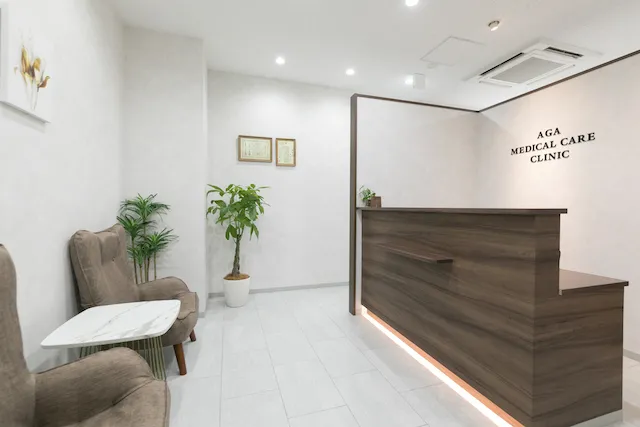
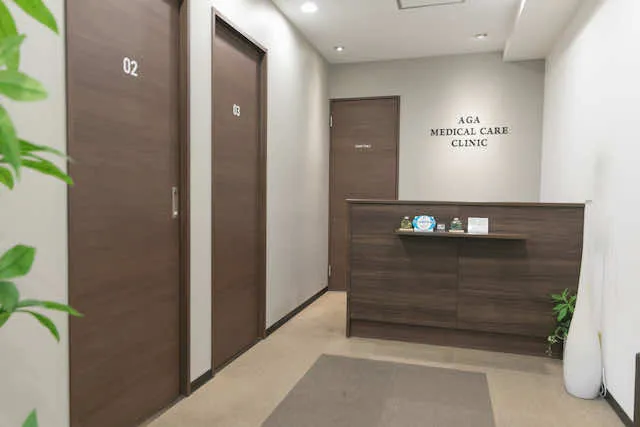
At AGA Medical Care Clinic, the doctor can conduct your consultation in English. Our counselor provides prepared materials in both English and Chinese, and also uses a translation app. If you would like to have an interpreter, please arrange one yourself.
A friend or family member can assist with the interpretation if needed.
If you need to check whether you can use your own translation app or whether a translation device is available, please ask through the contact form before your appointment.
For in-person consultations in English, our doctors in Tokyo and Yokohama will listen to your concerns and goals before beginning any treatment plan.
Frequently asked questions
- Can I use a translation app for my whole visit?
-
You can use it for simple check-in, scheduling, and brief questions. Don’t rely on it for treatment decisions, consent, or medication instructions. At our clinic, ask the doctor to confirm those points.
- Will my hair loss consultation be in English?
-
Yes. The doctor can conduct the medical consultation in English. The counselor may use prepared English and Chinese materials together with a translation app.
If you would like an interpreter, you will need to arrange one yourself, and a friend or family member can interpret for you.
- Should I prepare anything on my phone before the visit?
-
Yes. Save short translated sentences about your symptoms, current medicines, allergies, and main questions. Short complete sentences reduce mistranslations. You can also keep the generic name and dose of each medicine in a separate note.
- Is a free translation app enough for medication directions and side effects?
-
No. A free app can mistranslate a dose or a side effect. Ask the doctor to confirm the medicine name, directions, and warning signs, then repeat them in your own words before you leave.
References
1. Taira, B. R., Kreger, V., Orue, A., & Diamond, L. C. (2021). A Pragmatic Assessment of Google Translate for Emergency Department Instructions. Journal of General Internal Medicine, 36(11), 3361-3365. https://doi.org/10.1007/s11606-021-06666-z
2. Kong, M., Fernandez, A., Bains, J., Milisavljevic, A., Brooks, K. C., Shanmugam, A., Avilez, L., Li, J., Honcharov, V., Yang, A., & Khoong, E. C. (2026). Evaluation of the accuracy and safety of machine translation of patient-specific discharge instructions: a comparative analysis. BMJ Quality & Safety, 35(3), 150-158. https://doi.org/10.1136/bmjqs-2024-018384
3. Martos, M., Fields, B., Finlayson, S. G., Hartell, N., Kim, T., Larimer, E., Lau, J. J., Lin, Y. H., Salaguinto, T., Tran, N., & Lion, K. C. (2025). Accuracy of Artificial Intelligence vs Professionally Translated Discharge Instructions. JAMA Network Open, 8(9), e2532312. https://doi.org/10.1001/jamanetworkopen.2025.32312
4. Brewster, R. C. L., Gonzalez, P., Khazanchi, R., Butler, A., Selcer, R., Chu, D., Aires, B. P., Luercio, M., & Hron, J. D. (2024). Performance of ChatGPT and Google Translate for Pediatric Discharge Instruction Translation. Pediatrics, 154(1). https://doi.org/10.1542/peds.2023-065573
5. Chao, K. Y., Huang, C. H., Liu, W. L., Chen, C. Y., Lim, A. Y., Chu, Y. Z., Sasaoka, A., & Lin, C. Y. (2026). Comparative Evaluation of ChatGPT, Google Translate, and UD Talk for Chinese-to-Japanese Translation in Cardiology and Pulmonology Outpatient Consultations: Prospective Observational Study. Journal of Medical Internet Research, 28, e93082. https://doi.org/10.2196/93082